The kettle-on-the-back trick changed our winter dish water. I was burning propane to wash plates like a fool.
Cooking on a wood stove when the grid goes quiet
JHJune Harlow
Aug 16, 2026 · Sandpoint, ID
Wilderness EMT and off-grid cook. Writes about the kits and skills that get used, not the ones that look good on a shelf.
The first night the power went out for three days I made instant oats on a camp stove and wasted a canister I later wanted for water. The wood cookstove was right there. I had never learned its moods. I have since cooked on it through two winters of on-purpose practice so that an outage is just Tuesday with more soup.
Heat is a zone, not a number
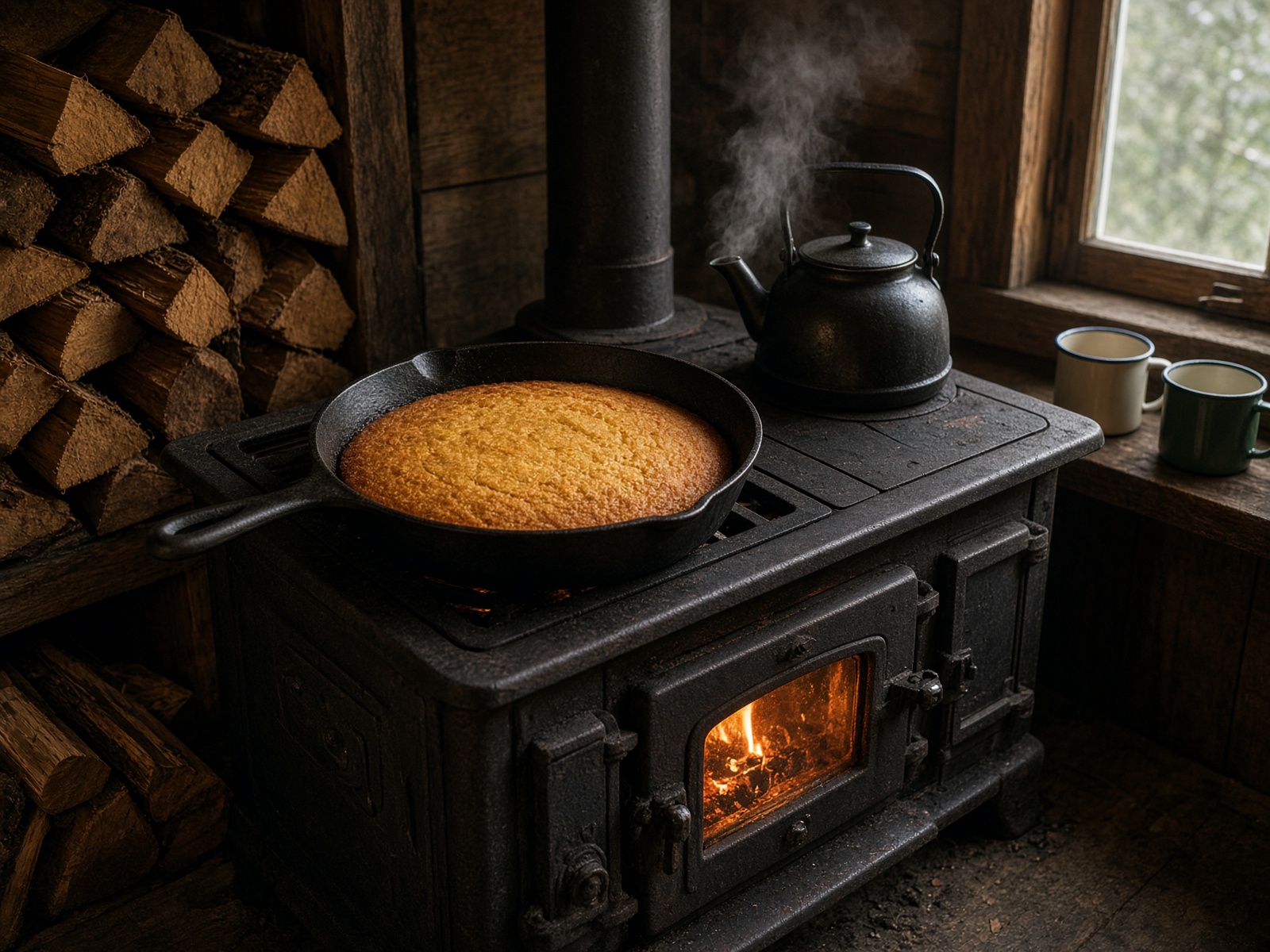
The front of the cooktop is hotter, the back is a simmer, the warming oven is a dehydrator. A cheap infrared thermometer taught me more than any folklore. I keep a kettle of water on the back all day so I am not lighting a second fire for dishes.
What I cook when it matters
One-pot beans, skillet cornbread, roasted roots in a covered Dutch oven, and anything that can sit. Cast iron is the cookware. Thin pans scorch before you notice. I shift pots instead of fussing with the damper every five minutes.
The freezer problem
If the outage looks long, cook the most perishable meat first and can or eat your way down. A full freezer stays colder than a half-empty one — pack it with jugs of water or newspaper if you eat a hole in it. Do not open it to "check."
Safety
A carbon monoxide alarm with a battery you actually replace. Dry wood. A metal bucket for ash that sits two days before it goes to the garden. Creosote is a real fire. I burn hot once a day to move it, and I have the chimney swept before Thanksgiving.
Learn this on a Sunday in October, not at 8 p.m. in an ice storm. The stove will tell you what it wants if you are not also panicking about the dark.