Saving tomato seed from the plants that still set fruit in a wet September is the only reason I have a sauce crop some years. Selecting on purpose works.
Saving seed so next year is not a guess
WOWren Okoye
Aug 15, 2026 · Ames, IA
Seed steward. Saves open-pollinated vegetables and teaches people how to stop buying next year's garden in January.
Buying seed every January is a subscription to someone else's weather. Saving your own is how a variety becomes yours — adapted to your frost date, your clay, your neglect.
Start with the easy ones
Beans, peas, tomatoes, lettuce, and most herbs are honest with beginners. Squash and corn will cross on you. Save those after you have a season of isolation or hand-pollination under your belt.
Let it finish
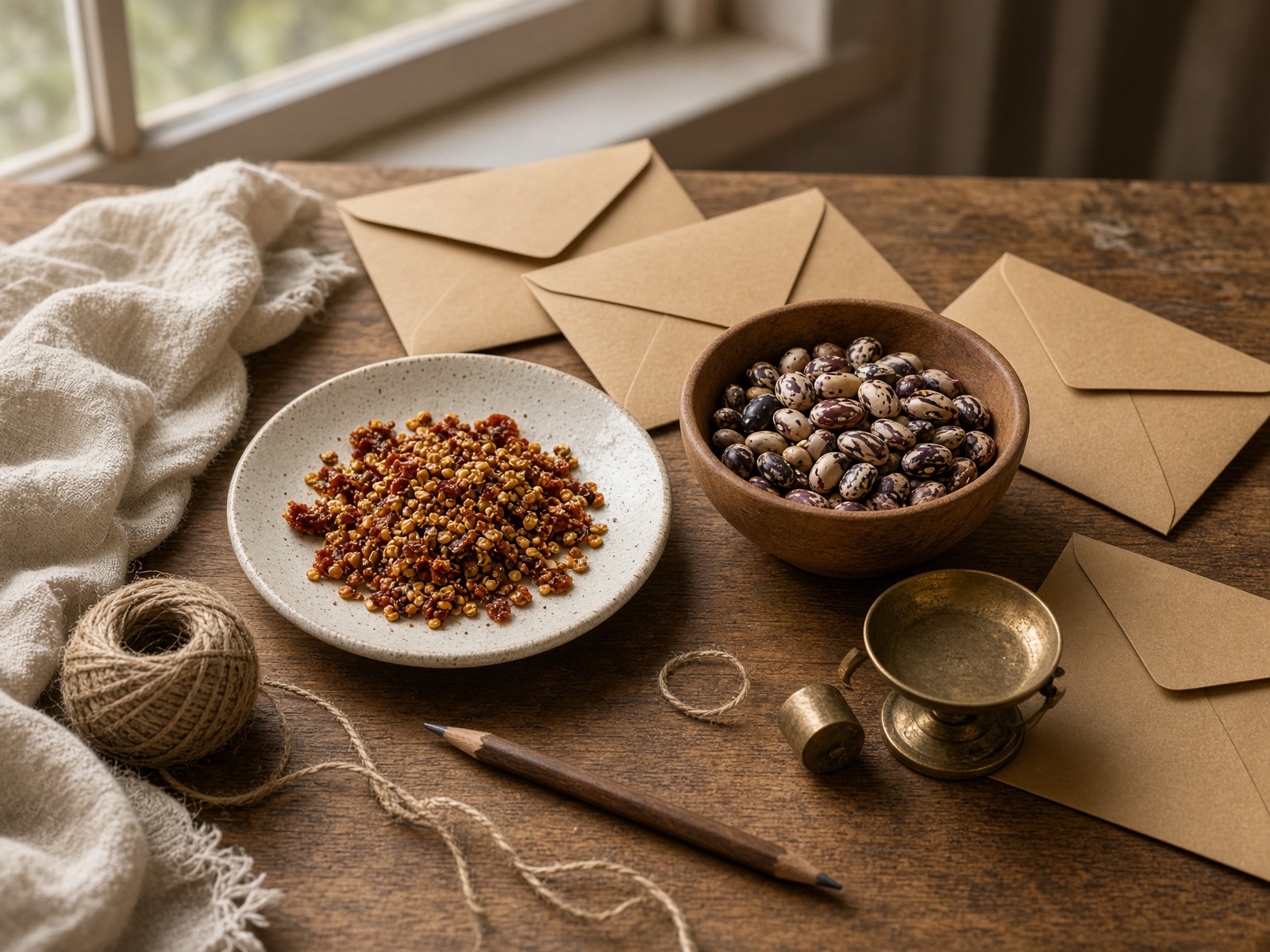
Seed that is ready looks tired. Tomato seeds come from fruit left past eating-ripe, fermented a few days so the gel lets go. Bean pods should rattle. Lettuce bolts, flowers, and dries on the stalk. If you pick early you are storing compost.
Dry, then colder
Spread seed in a single layer out of the sun until it snaps, not bends. I use a screen over a crate. Then into a labeled envelope, then into a jar with a silica packet in the back of the fridge. Warm and wet is how you lose a year of work in a month.
Write it down
Variety, year, and one sentence about the plant: "early, held in the July dry spell." Next spring your memory will lie. The pencil will not.
What not to save
Hybrids (F1) will not come back true. Anything that was the only sad survivor of blight — you will select for "almost died." Save from the plants you would plant again on purpose.
I keep a small tin of this year's best in my coat so I remember to trade it. Seed that never leaves the jar is a museum. Seed that moves is a commons.