Easy Ketchup
Aug 18, 2026 · 127.0.0.1
Notes here are members’ methods, not professional advice. Canning, water treatment, and first aid can be dangerous if done wrong. Read the safety disclaimer.
Up and coming survivalist/prepper. I love working on keeping my family prepared.
Homemade Tomato Ketchup for Canning: Fresh, Tangy, and Better Than Store-Bought
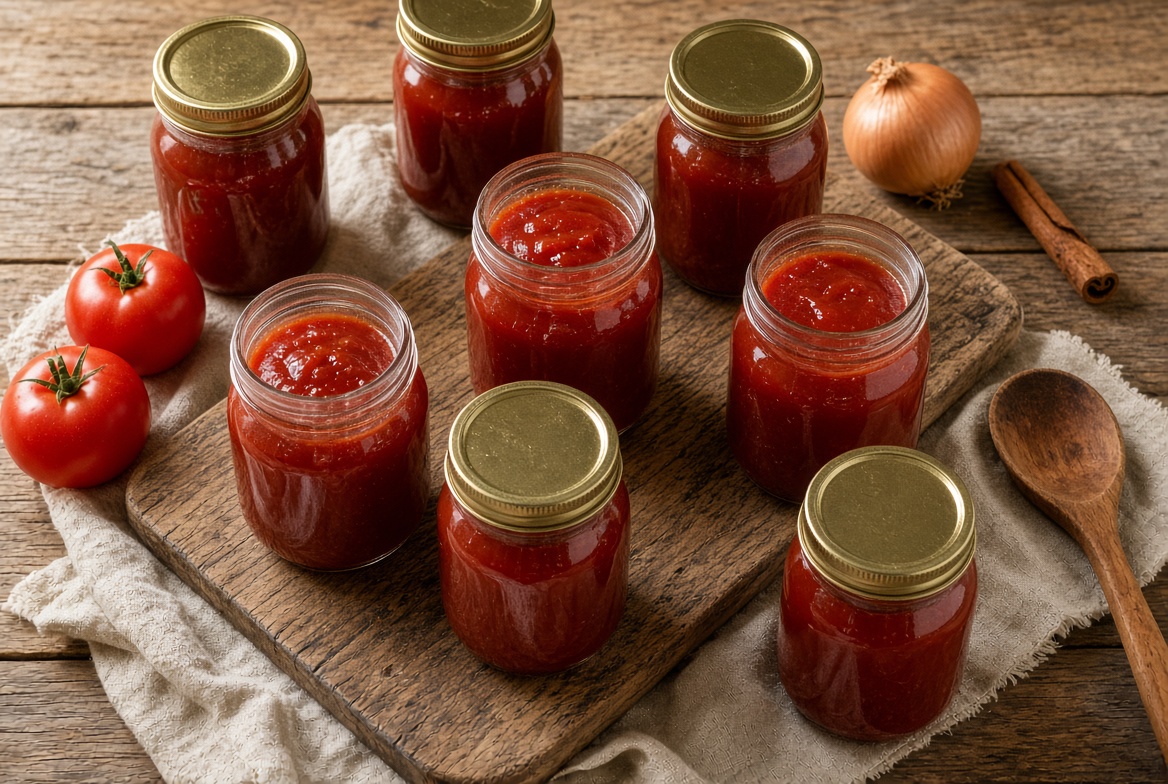
There’s something deeply satisfying about turning a mountain of ripe summer tomatoes into jars of rich, homemade ketchup. No mystery ingredients, no high-fructose corn syrup—just pure tomato flavor, a balanced tang from vinegar and spices, and the quiet pride of a pantry stocked with something you made yourself. This recipe is adapted from the tested versions published by the National Center for Home Food Preservation and Ball’s Complete Book of Home Preserving. It’s designed for safe water-bath canning, so you can enjoy your ketchup all year long.
Yield Approximately 6–7 pint jars
Ingredients
- 24 pounds
- ripe tomatoes
- 3 cups
- chopped onions (about 4 medium)
- ¾ teaspoon
- ground red pepper (cayenne)
- 3 cups
- cider vinegar (5% acidity)
- 4 teaspoons
- whole cloves
- 3
- cinnamon sticks, crushed or broken into pieces
- 1½ teaspoons
- whole allspice
- 3 tablespoons
- celery seeds
- 1½ cups
- granulated sugar
- ¼ cup
- canning or pickling salt
Equipment You’ll Need Large stockpot (at least 4-gallon capacity), cheesecloth or spice bag, food mill or fine-mesh sieve, pint canning jars with two-piece lids, jar lifter, and a boiling-water canner. Instructions
Prep the tomatoes Wash the tomatoes thoroughly. Working in batches, blanch them in boiling water for 30–60 seconds until the skins split. Transfer to a bowl of ice water, then slip off the skins. Core and quarter the tomatoes and place them in a large stockpot.
Cook the base Add the chopped onions and cayenne pepper. Bring the mixture to a boil over high heat, then reduce to a gentle simmer and cook uncovered for 20 minutes. Cover the pot, turn off the heat, and let it stand for 20 minutes.
Infuse the vinegar Tie the whole cloves, cinnamon sticks, allspice, and celery seeds in a square of cheesecloth to make a spice bag. Place the bag in a smaller saucepan with the cider vinegar. Bring to a boil, then remove from heat and let the spices steep for 20–25 minutes.
Discard the spice bag.
Combine and reduce Pour the infused vinegar into the tomato mixture. Return to a boil and cook for about 30 minutes. Press the mixture through a food mill or sieve to remove seeds and any remaining solids. Return the smooth puree to the pot.
Season and thicken Stir in the sugar and salt. Boil gently, stirring frequently to prevent scorching, until the volume reduces by roughly half and the ketchup mounds on a spoon without separating. This usually takes 45 minutes or longer, depending on your tomatoes and the width of your pot.
Fill the jars Ladle the hot ketchup into hot pint jars, leaving ⅛-inch headspace. Remove any air bubbles, wipe the rims clean with a damp cloth, and apply the lids and bands fingertip-tight.
Process in a boiling-water canner Process the jars according to your altitude:
- 0–1,000 feet
- 15 minutes
- 1,001–6,000 feet
- 20 minutes
- Above 6,000 feet
- 25 minutes
When the processing time is complete, turn off the heat, remove the canner lid, and let the jars sit for 5 minutes. Carefully lift them out and place them on a towel to cool undisturbed for 12–24 hours. Check the seals, remove the bands, label, and store in a cool, dark place.
Tips for Success
Stick to the tested ratios of tomatoes, onions, and vinegar. These keep the ketchup acidic enough for safe water-bath canning. Homemade ketchup is typically a bit thinner and less aggressively sweet than commercial brands—that’s part of its charm. You can gently adjust the spice levels once you’re familiar with the base recipe, but never reduce the vinegar or change the produce-to-acid proportions. Properly sealed jars will keep for at least a year (and often longer) in a cool, dark pantry.
There’s nothing quite like the first burger or plate of fries topped with ketchup you put up yourself. One batch and you’ll understand why so many home canners make this every tomato season. Happy canning!
Comments
0No comments yet. Be the first to add to this note.